
Tax Season Organization: The Office Supplies You Need to Stay on Track

Tax season feels far less overwhelming when financial records are organized throughout the year. When receipts, invoices, statements, and supporting documents have a clear place to go, businesses spend less time searching for paperwork and more time reviewing accurate information.
The right office supplies can make that process easier. Filing folders, document organizers, labels, binders, secure storage, and shredding supplies help businesses create practical systems that support recordkeeping before, during, and after tax season.
At OneSource Office Products, we help Alabama businesses stay organized with dependable filing, storage, labeling, and document-management supplies. Use this guide to build a tax-season organization system that works throughout the year.
Start with a Simple Tax Document Filing System
A filing system should make documents easy to store when they arrive and easy to retrieve when they are needed. Complicated systems often get abandoned, so begin with a few clear categories that reflect how your business handles financial records.
Common categories may include:
- Income and sales records.
- Business expenses.
- Vendor invoices.
- Payroll documents.
- Bank and credit card statements.
- Asset and equipment purchases.
- Insurance and licensing records.
- Prior-year tax documents.
Use manila file folders for individual categories, employees, vendors, or accounts. For larger groups of documents, expanding file wallets provide additional capacity while helping prevent loose papers from being misplaced.
Consistent organization becomes easier when financial records and everyday supplies each have designated storage areas. Our upcoming guide to creating a more organized office supply closet will offer additional ideas for maintaining those systems over time.
Use Color Coding to Find Important Records Faster
Color coding gives employees a quick visual way to distinguish between document types. Rather than reading every folder label, someone can immediately recognize that one color represents expenses while another identifies income or payroll records.
A basic color-coded filing system could assign:
- Green folders to income and deposits.
- Red folders to expenses and bills.
- Blue folders to payroll and employee records.
- Yellow folders to receipts and reimbursements.
- Gray folders to previous tax years.
The specific colors matter less than consistency. Create a simple reference key and make sure everyone who handles records follows the same system.
Organize Receipts Before They Become a Problem
Receipts are among the easiest business records to lose. Small slips can become mixed with unrelated papers, fade over time, or remain in wallets and vehicles instead of reaching the person responsible for bookkeeping.
Create a clear collection process using:
- Accordion files organized by month or expense category.
- Envelopes or document pouches for smaller receipts.
- Desktop inboxes where employees can submit expense documentation.
- Binder clips for grouping related receipts and invoices.
- Staplers for attaching receipts to expense forms or supporting documents.
When receipts are also scanned or stored digitally, use a consistent file-naming system that includes the date, vendor, amount, or expense category. Follow the recordkeeping process recommended by your accountant or tax professional for your specific business.
Keep Invoices and Statements in Chronological Order
Invoices, statements, and payment confirmations are easier to review when they follow a predictable order. Organize them by month, vendor, client, or account, depending on how your business typically searches for information.
Helpful supplies include:
- Three-ring binders.
- Monthly binder dividers.
- File jackets.
- Document trays for items awaiting review.
- Expanding files for completed monthly records.
At the end of each month, move completed documents from temporary desktop storage into their permanent files. This short routine prevents paperwork from accumulating until tax deadlines are near.
Label Every File, Binder, and Storage Box Clearly
A filing system is only helpful when employees can identify its contents quickly. Clear, consistent labels reduce filing mistakes and save time when records need to be retrieved.
Useful labeling supplies include:
- Label makers for folders, binders, cabinets, and archive boxes.
- Sticky notes and page tabs for temporary reminders and document review.
- Binder dividers for separating months, accounts, or financial categories.
- Permanent markers for archive boxes.
- Printable file-folder labels for larger systems.
Use the same naming structure across paper and digital files whenever possible. A consistent format makes it easier to locate supporting documents regardless of where they are stored.
Dependable writing and labeling tools also support accuracy during everyday office tasks. Our upcoming article on choosing writing tools that support workplace productivity will explore those practical benefits in greater detail.
Keep Essential Tax Preparation Supplies Within Reach
Once records are organized, basic office tools make reviewing, calculating, marking, and assembling documents more efficient.
Useful supplies include:
- Pens, markers, and highlighters for identifying important figures or missing information.
- Calculators for reviewing totals and checking figures.
- Binders for completed returns and supporting records.
- Sticky flags for documents requiring follow-up.
- Paper clips and binder clips for keeping related materials together.
- Document trays for separating items that are complete, pending, or ready to file.
Keeping these products stocked throughout the year prevents last-minute supply runs when deadlines are approaching.
Protect Sensitive Financial Records
Tax records often contain confidential information, including employee details, banking information, account numbers, and financial data. Organizing these documents is important, but protecting them is just as critical.
Businesses should store sensitive records in secure locations and limit access to employees who need the information for legitimate work purposes.
Helpful security supplies include:
- Lockable file cabinets.
- Secure document boxes.
- Fire-resistant storage for especially important records.
- Document shredders for records approved for disposal.
- Shredder bags and maintenance supplies.
Before destroying tax or financial documents, confirm the appropriate retention period with your accountant, attorney, or other qualified professional. Recordkeeping requirements can vary depending on the document and the needs of your business.
Create a Monthly Recordkeeping Routine
The best time to organize tax documents is not the week before a deadline. A short monthly routine keeps paperwork manageable and helps identify missing records while transactions are still fresh.
Set aside time each month to:
- File receipts and expense documentation.
- Match invoices with payment records.
- Organize bank and credit card statements.
- Scan important paperwork when appropriate.
- Move completed records into permanent storage.
- Review supply levels for folders, labels, binders, and printer paper.
- Secure or shred documents according to your record-retention process.
Assigning one person to oversee the process can improve consistency, but every employee who handles financial documents should understand where records belong.
Keep Desks and Workstations Organized
Financial paperwork often becomes misplaced before it ever reaches the filing cabinet. A simple desk organization system helps keep new documents visible, separated, and moving through the appropriate review process.
Useful workstation supplies include:
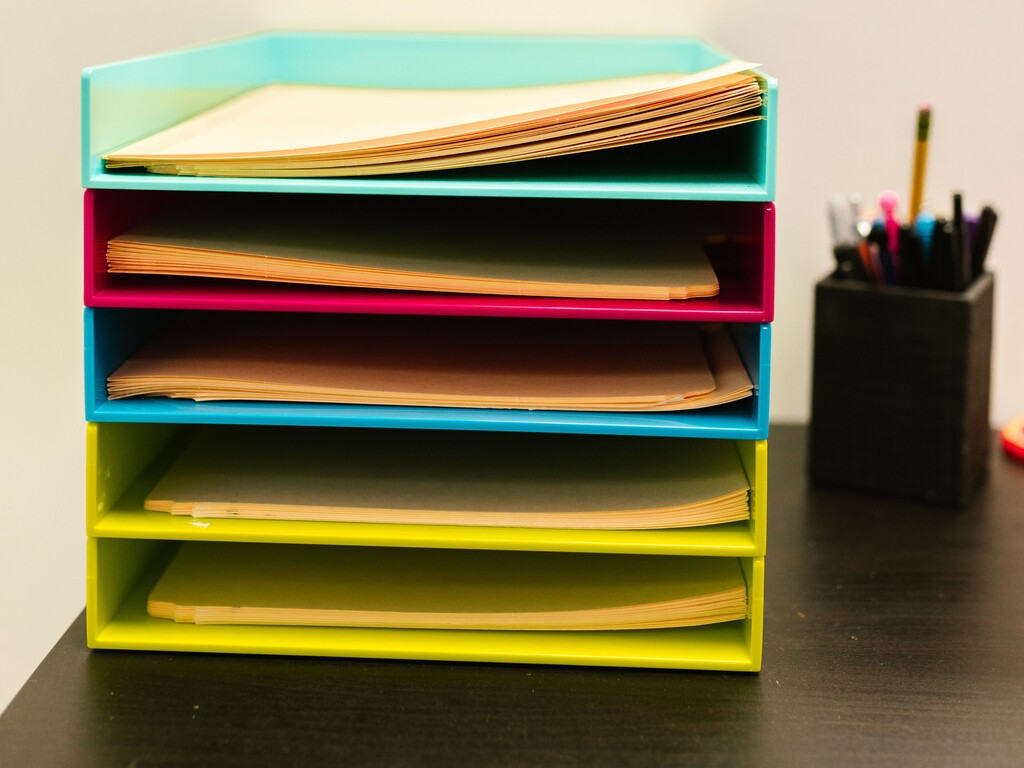
- Desktop file organizers.
- Stackable document trays.
- Inbox and outbox folders.
- Envelopes for outgoing paperwork.
- Small containers for clips, flags, and writing tools.
A simple three-tray system labeled To Review, Waiting for Information, and Ready to File can keep paperwork from blending into one unmanageable stack.
Our upcoming guide to creating a more organized and efficient desk will provide additional ideas for keeping everyday paperwork under control.
Archive Prior-Year Tax Records Carefully
Once a tax year is complete, move its records out of active filing areas and into clearly labeled archive storage. This keeps current documents accessible without mixing them with older information.
Each archive box or binder should clearly identify:
- The tax year.
- The business or entity name.
- The types of records included.
- The date the records may be reviewed for disposal.
- Any access restrictions.
Store archived records in a secure, dry location where they remain protected but accessible if your accountant, tax professional, or business needs them later.
Maintain an Office Supply Checklist
Running out of basic supplies can interrupt tax preparation at the worst possible time. Keep a small inventory of the products your team relies on most during financial review and filing.
Your tax-season supply checklist may include:
- File folders and labels.
- Expanding wallets and accordion files.
- Binders and dividers.
- Copy paper and printer supplies.
- Envelopes and document pouches.
- Pens, highlighters, and sticky flags.
- Binder clips, paper clips, and staples.
- Shredder bags and lubricant sheets.
- Archive boxes.
Frequently used products are easier to manage when they are included in a repeatable inventory process. Our upcoming article on supplies businesses should keep stocked in bulk will help you decide which products are worth ordering ahead.
Planning Ahead Reduces Tax-Season Stress
Waiting until deadlines approach often leads to misplaced records, duplicate purchases, rushed decisions, and avoidable frustration. A year-round system helps your business stay prepared while making it easier to provide organized information to your accountant or tax professional.
Many Alabama businesses also simplify supply management by ordering from a dependable local provider. Our upcoming guide to the advantages of buying office supplies locally explains how local service can reduce delays and last-minute supply runs.
Stay Organized Before, During, and After Tax Season
Tax-season organization is not about creating a complicated filing system. It is about establishing clear habits and giving employees the tools they need to manage important documents consistently.
With the right folders, labels, binders, secure storage, shredding supplies, and monthly routines, businesses can reduce stress, improve accuracy, and remain better prepared throughout the year.
At OneSource Office Products, we help Alabama businesses stay organized with dependable filing products, document storage, writing supplies, shredders, and everyday office essentials. Our local team makes it easier to find the products you need and keep them stocked throughout the year.
Browse office organization supplies, or contact OneSource Office Products for help building a more organized workplace.
One Source... Infinite Possibilities...
At One Source Business Interiors, we believe where function and design collide, exceptional workspaces emerge. No matter how you work, our commitment remains steadfast: to create functional, yet beautiful spaces tailored for your team and your business. Ready to see the difference? Fill out the quote request form and discover the unique solutions we can offer.