Flexible Workspaces Made Simple: Tips for Hybrid and Remote Work
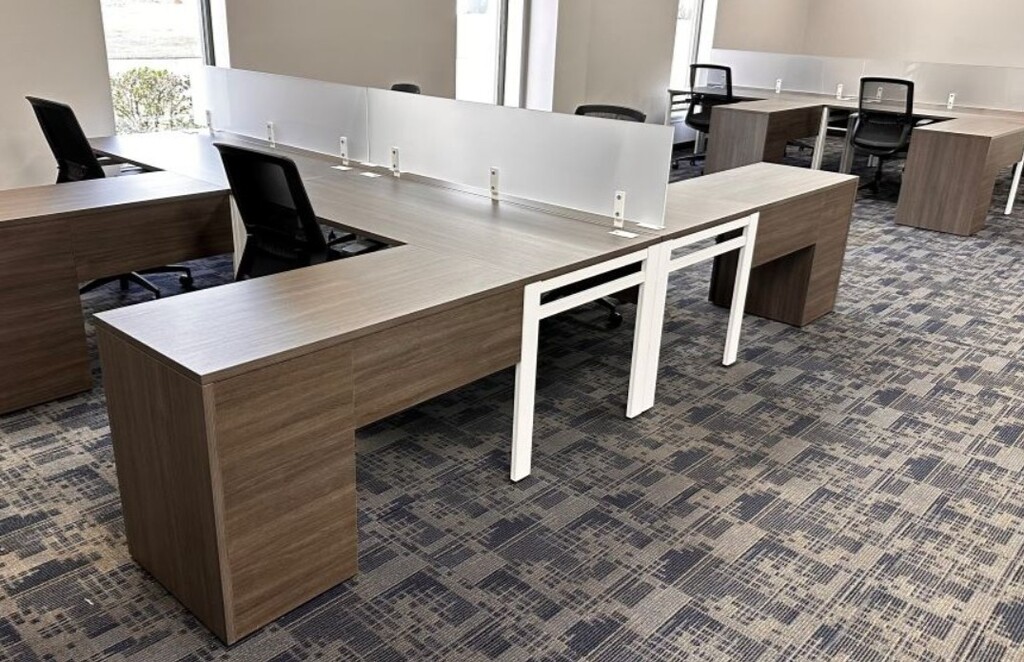
Hybrid work is no longer a temporary adjustment. For many businesses, it has become the way teams operate every day. Employees split their time between home and the office, departments follow different schedules, and some workstations sit empty while other parts of the office feel crowded.
A flexible workspace solves those problems by giving employees access to the right environment for the task at hand. Instead of designing an office around assigned desks alone, businesses can create a mix of collaborative areas, quiet rooms, shared workstations, and technology-enabled meeting spaces.
At OneSource Business Interiors, we help organizations across Alabama create adaptable workplaces that make better use of available space while supporting productivity, collaboration, employee comfort, and future growth.
Start With How Your Team Actually Uses the Office
A successful hybrid office begins with understanding how employees work, not simply how many people are on the payroll. Before selecting furniture or changing the floor plan, look closely at when employees come into the office, why they come in, and which spaces they use most often.
Ask questions such as:
- How many employees are typically in the office each day?
- Which teams need to collaborate in person?
- How much quiet, focused work takes place?
- Are assigned desks being used often enough to justify the space?
- Which conference rooms or common areas are consistently underused?
- Will your current layout still work as the company grows?
This information helps reveal where space is being wasted and where additional support is needed. Businesses preparing for a move, expansion, or redesign can avoid expensive mistakes by planning the office before purchasing furniture.
Replace Underused Assigned Desks With Flexible Workstations
In a traditional office, every employee may have a permanent workstation even if they only work on-site a few days each week. That approach can leave valuable square footage unused for long stretches of time.
Shared workstations, hoteling areas, and reservable desks allow multiple employees to use the same space on different days. This gives hybrid teams the work surfaces they need without requiring a dedicated desk for every person.
Flexible workstations work best when they include:
- Adjustable chairs that can accommodate different users.
- Monitor arms that are easy to reposition.
- Universal docking stations.
- Accessible power and charging options.
- Storage for personal items and work materials.
- Simple reservation or scheduling systems.
Furniture selection plays a major role in how easily these spaces adapt. Mobile storage, adjustable work surfaces, and modular furniture systems make it easier to reconfigure the office as schedules and staffing needs change. Our commercial office furniture buying guide explains how to evaluate furniture for durability, flexibility, and long-term value.
Give Employees Spaces for Both Collaboration and Focus
Many employees come into the office specifically to collaborate with coworkers. That does not mean the entire office should be open, noisy, or designed for constant interaction.
Hybrid teams still need quiet spaces for phone calls, video meetings, detailed work, and confidential conversations. The most effective flexible offices give employees several environments to choose from throughout the day.
Consider including:
- Open collaboration areas for team discussions.
- Small huddle rooms for quick meetings.
- Phone booths for private calls and virtual meetings.
- Quiet rooms for focused work.
- Conference rooms for larger groups.
- Comfortable lounge areas for informal conversations.
The right mix depends on your team and the type of work being performed. Some organizations benefit from mostly open environments, while others need more enclosed spaces. Our guide to balancing open offices with private work areas can help you decide what makes sense for your workplace.
Use Office Layout to Make Hybrid Work More Efficient
A flexible workplace should feel easy to navigate. Employees should be able to arrive, find an appropriate place to work, access the technology they need, and move between individual and collaborative tasks without unnecessary interruptions.
Good layout planning can improve that experience by:
- Keeping high-traffic areas away from quiet work zones.
- Positioning shared resources where everyone can access them.
- Creating clear pathways between workstations and meeting spaces.
- Grouping collaborative areas near the teams that use them most.
- Providing enough separation between virtual meetings and focused work.
When layout, furniture, and workflow are planned together, businesses can make better use of every square foot. These same principles are explored in our guide to creating a more productive office layout.
Make Technology Easy for Everyone to Use
Hybrid work depends on reliable technology, but that technology should feel almost invisible. Employees should not have to spend the first several minutes of every meeting searching for cables, adjusting screens, or trying to connect remote participants.
Flexible offices often benefit from:
- Universal docking stations at shared desks.
- Wireless presentation systems.
- High-quality cameras and microphones in meeting rooms.
- Large displays that remote participants can see clearly.
- Reliable wireless internet throughout the office.
- Convenient power access in workstations, lounges, and meeting areas.
Technology planning should happen early in the design process so power access, furniture placement, cable management, and meeting room layouts work together. Adding technology after the office is furnished often leads to clutter, limited flexibility, and unnecessary costs.
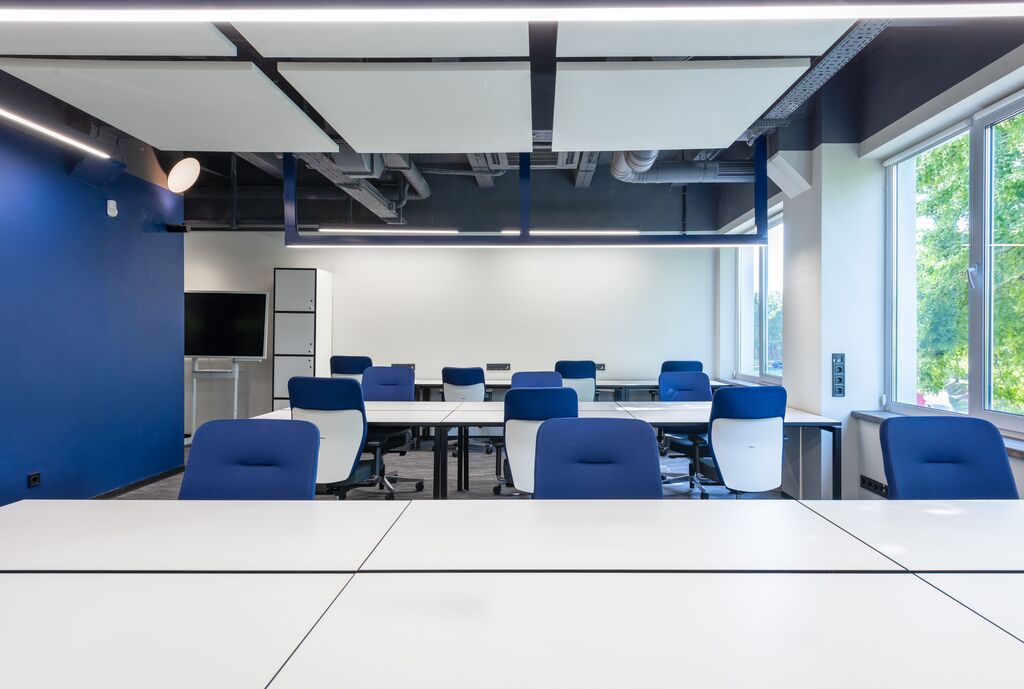
Make Every Shared Workstation Comfortable
Shared workstations should be flexible, but they should never feel temporary or uncomfortable. Every employee who uses the space should be able to adjust the setup quickly and work without strain.
Prioritize:
- Ergonomic chairs with simple adjustment controls.
- Height-adjustable desks.
- Monitor arms that can be repositioned easily.
- Comfortable keyboard and mouse placement.
- Task lighting that supports different users and work styles.
Because shared seating must accommodate different employees, adjustability matters even more in a hybrid office. Our guide to choosing an office chair that supports comfort and productivity explains which ergonomic features are worth prioritizing.
Create an Office Employees Want to Use
For hybrid work to succeed, the office needs to offer something employees cannot easily recreate at home. That does not mean adding trendy features for the sake of appearance. It means creating a workplace that makes collaboration easier, supports focused work, and helps employees feel connected to the company.
Natural light, comfortable furnishings, inviting shared spaces, and thoughtful branding can all make the office feel more purposeful and welcoming.
Useful additions may include:
- Comfortable lounge seating for informal conversations.
- Well-equipped meeting rooms.
- Break areas that encourage employees to step away and recharge.
- Quiet spaces that offer more privacy than a home environment may provide.
- Design elements that reinforce company culture and identity.
A better workplace experience can also influence employee morale and retention. Businesses that want to strengthen company culture should consider how office design decisions affect employee satisfaction and turnover.
Keep Shared Supplies Organized and Easy to Access
Flexible offices rely on shared resources, which makes organization especially important. Employees should be able to find the supplies they need without searching through multiple cabinets or leaving their work area.
Create clearly labeled locations for:
- Writing tools and notepads.
- Charging cables and technology accessories.
- Printer paper and toner.
- Cleaning wipes for shared workstations.
- Meeting and presentation supplies.
A consistent restocking process helps prevent shared workstations from running out of essentials. Using a monthly office supply restocking system can keep the workplace organized and ready for employees on any schedule.
Design for Change Instead of One Fixed Routine
Hybrid schedules will continue to evolve. Team sizes may change, departments may reorganize, and new technology may affect how employees use the office. A flexible workplace should be able to respond without requiring a full redesign every few years.
Future-ready design features include:
- Modular furniture systems that can be expanded or rearranged.
- Movable partitions that create temporary rooms or zones.
- Multipurpose spaces that support meetings, training, and individual work.
- Scalable workstation layouts.
- Furniture with integrated power and data access.
If your current office cannot adapt to the way your team now works, it may be time to decide whether updating the existing space is enough. Our comparison of renovating an office versus beginning with a new design can help you evaluate the options.
Flexible Workspaces Help Businesses Use Space More Wisely
A flexible office is not simply an open room filled with shared desks. It is a carefully planned workplace that gives employees the right balance of collaboration, privacy, comfort, and technology.
When businesses design around actual attendance patterns and employee needs, they can reduce wasted space, improve productivity, and create an office that remains useful as work continues to change.
At OneSource Business Interiors, we help Alabama organizations create adaptable commercial workspaces that support hybrid teams today while preparing for future growth. From space planning and furniture selection to installation and project management, our team can help you build an office that works for everyone.
Contact OneSource Business Interiors to begin planning a flexible workspace for your team.
One Source... Infinite Possibilities...
At One Source Business Interiors, we believe where function and design collide, exceptional workspaces emerge. No matter how you work, our commitment remains steadfast: to create functional, yet beautiful spaces tailored for your team and your business. Ready to see the difference? Fill out the quote request form and discover the unique solutions we can offer.