
Office Furniture Budget: How Much Should You Plan Per Employee?
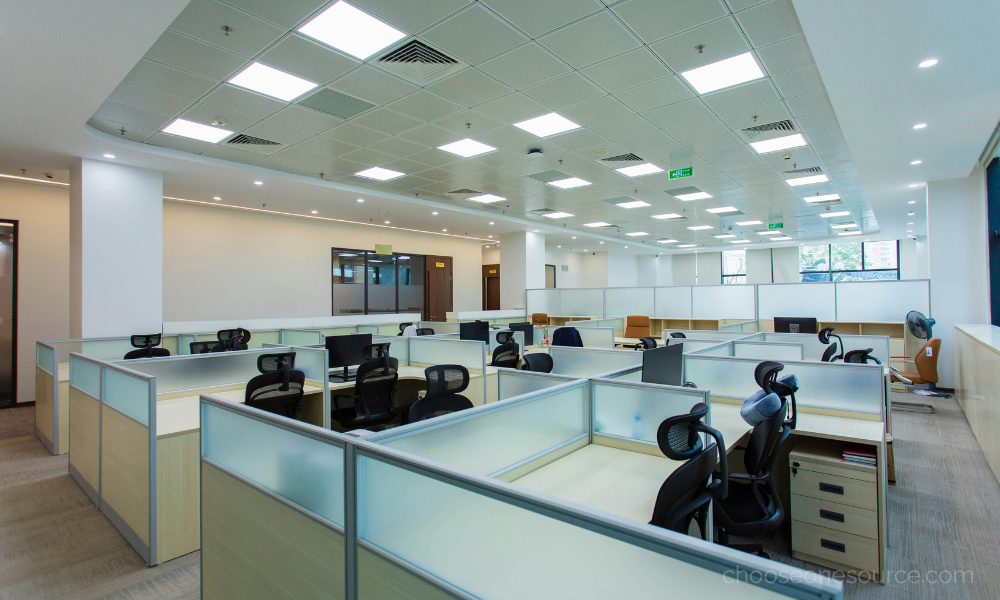
When you're planning a new office, expansion, or furniture replacement project, one of the fastest ways to establish a starting budget is to ask a simple question: How much should we plan to spend on office furniture per employee?
Cost per employee can be a useful planning tool, especially when you're working with an early headcount and don't yet have every desk, chair, conference table, and storage piece selected.
But there's an important catch.
Two companies with 25 employees can have dramatically different furniture budgets. One may need 25 straightforward workstations and a small conference room. Another may have private offices, executive spaces, multiple meeting rooms, a reception area, collaborative spaces, and specialized furniture.
At OneSource Business Interiors, we help Alabama organizations turn headcount, floor plans, workflow, and business goals into realistic workplace plans. Here's how to use cost per employee as a budgeting tool without letting a simple estimate give you the wrong picture of what your project will actually require.
What Does Office Furniture Cost Per Employee Include?
Before comparing numbers, make sure you're comparing the same things.
A basic per-employee furniture allowance might include:
- A desk or workstation.
- An ergonomic task chair.
- Basic personal storage.
- Necessary workstation accessories.
A more complete project budget may also need to account for each employee's share of:
- Conference and meeting rooms.
- Reception furniture.
- Collaborative spaces.
- Breakroom furniture.
- Training areas.
- Shared filing and storage.
- Delivery and installation.
That's why a per-person number is best used as an early planning benchmark rather than a substitute for an actual space plan and furniture proposal.
A Starting Range for Office Furniture Per Employee
Commercial office furniture costs vary significantly based on product quality, configuration, finishes, ergonomics, and project complexity.
For early budgeting purposes, businesses might begin thinking in broad ranges such as:
- $1,000 to $2,000 per employee: Straightforward commercial-grade workstations, task seating, and basic storage.
- $2,000 to $4,000 per employee: Upgraded ergonomic seating, higher-quality workstations, additional storage, better finishes, and greater flexibility.
- $4,000+ per employee: Premium furniture, height-adjustable workstations, executive furnishings, higher-end materials, specialized configurations, and design-forward environments.
These are planning ranges, not quotes. Your actual project can fall below or above them depending on what your workplace requires, and shared spaces can substantially change the total.
For a broader look at all the expenses involved, our complete office furnishing cost guide explains how workstations, shared spaces, quality, delivery, and installation affect the overall project budget.
Start with the Workstation
For many employees, the workstation represents the largest portion of their individual furniture allocation.
Depending on the position and workplace, that may include:
- A freestanding desk.
- A modular workstation.
- A height-adjustable desk.
- Privacy panels.
- Mobile pedestals.
- Overhead storage.
- Monitor arms.
- Power and cable-management accessories.
The right configuration depends on the employee's job, the equipment they use, the amount of storage they need, and how much space is available.
A workstation that's unnecessarily large wastes both money and square footage. One that's too small can create clutter and make everyday work more difficult.
Don't Underbudget for the Office Chair
If there's one place where businesses should be careful about cutting costs, it's task seating.
Employees may spend a significant portion of the workday in their chairs. A quality commercial task chair can offer:
- Adjustable seat height.
- Appropriate lumbar support.
- Adjustable armrests.
- Seat-depth options.
- Durable components designed for frequent use.
- Better accommodation for different users.
That doesn't mean every employee needs the most expensive chair available. It means seating should be selected based on fit, adjustability, durability, and expected use rather than price alone.
Before making that investment, consider how comfort, durability, space, workflow, and long-term use should influence office furniture decisions.
Private Offices Usually Cost More Per Employee
An employee working at a shared benching system and an executive in a private office won't require the same furniture budget.
A private office may include:
- A larger desk.
- A task chair.
- Guest chairs.
- A credenza.
- Bookcases or filing.
- Occasional tables.
- Additional storage.
Executive offices may also use upgraded finishes and materials.
This is one reason averages can become misleading. If half your team works in private offices and the other half uses open workstations, a single per-person allowance may not accurately represent either group.
Understanding how open and private office layouts affect privacy, collaboration, space use, and furniture requirements can help establish a more realistic budget.
Shared Spaces Still Belong in the Budget
One of the biggest mistakes in per-employee budgeting is calculating the cost of individual workstations and stopping there.
Your employees also use:
- Conference rooms.
- Huddle rooms.
- Training spaces.
- Breakrooms.
- Reception areas.
- Collaborative spaces.
- Shared storage.
Those areas don't belong to one employee, but someone still has to account for them in the project budget.
For example, a 20-person office may require one conference room, while a 100-person organization could need several meeting rooms, training spaces, informal collaboration areas, and substantially more common-area furniture.
Hybrid Work Can Change the Math
A hybrid workplace doesn't necessarily need one permanently assigned workstation for every employee.
Some organizations can reduce the number of individual desks by using:
- Shared workstations.
- Hoteling spaces.
- Touchdown areas.
- Reservable offices.
- Flexible team rooms.
But that doesn't always mean the furniture budget drops proportionally.
Hybrid workplaces may invest more heavily in collaborative spaces, adaptable furniture, technology integration, and areas that support different types of work throughout the day.
The better question isn't simply how many desks you can eliminate. It's how to create a flexible workplace that supports employees whether they're collaborating, concentrating, meeting, or working between locations.
Your Industry Should Influence the Budget
A useful office furniture budget should reflect how your organization operates.
Consider the differences between:
- A law firm that prioritizes private offices and confidential meeting spaces.
- A healthcare organization that needs durable, cleanable furniture.
- A creative team that relies heavily on collaborative areas.
- A financial office that requires both client-facing spaces and focused work areas.
- A school or university with administrative, instructional, and flexible-use spaces.
Even with identical headcounts, these organizations shouldn't expect identical furniture budgets.
Planning around the actual work being performed is why matching workplace design to the needs of your industry produces a more functional space than following a generic office formula.
Furniture Quality Affects Cost Per Year, Not Just Cost Per Employee
Initial purchase price tells only part of the story.
Imagine one chair costs less upfront but needs to be replaced much sooner, while another costs more initially but remains comfortable and functional for years of commercial use.
The second chair may ultimately be the better financial decision.
When evaluating furniture, consider:
- Expected useful life.
- Warranty coverage.
- Availability of replacement parts.
- Durability of materials.
- Ability to repair or reconfigure the product.
- How heavily the furniture will be used.
Looking at lifetime value instead of purchase price alone helps explain why investing strategically in commercial-grade furniture can produce better long-term value.
Budget for Employees You Haven't Hired Yet
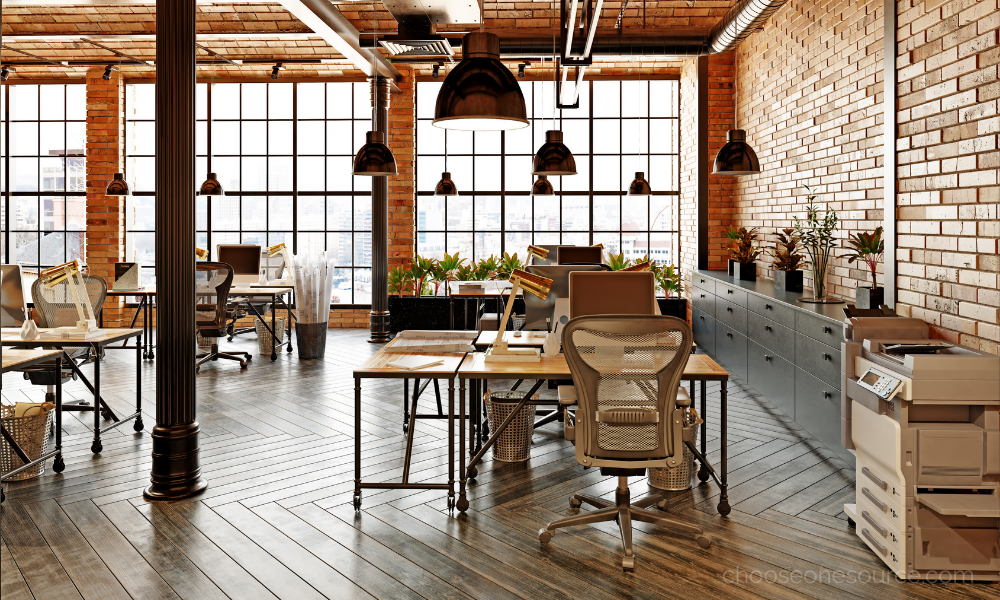
If your business is growing, don't design the office exclusively around today's headcount.
Before ordering furniture, ask:
- How many employees do we expect to add in the next few years?
- Can the workstation system expand?
- Will matching furniture still be available?
- Can rooms change functions as we grow?
- Do we have enough meeting and collaborative space for a larger team?
Planning ahead can prevent a growing organization from replacing perfectly good furniture simply because the original layout can't adapt.
What Would Furniture for 10 Employees Cost?
Using a per-employee allowance can help create a preliminary number.
For example, if you're planning approximately $2,000 per employee, ten employees would create a starting workstation-and-seating budget of roughly $20,000.
But that does not mean $20,000 will furnish the entire office.
You may still need to account for:
- Conference furniture.
- Reception furniture.
- Breakroom furniture.
- Shared storage.
- Delivery.
- Installation.
This distinction is important when using online estimates. A cost-per-employee calculation is useful for preliminary planning, but it shouldn't be mistaken for a complete project estimate.
What About 25, 50, or 100 Employees?
The same principle applies as headcount grows, but larger organizations often become more complex.
At 25 employees, you may begin adding more meeting areas and departmental storage.
At 50 employees, workflow between departments, conference capacity, training areas, and shared spaces become increasingly important.
At 100 employees, simply multiplying a workstation allowance by 100 tells you very little about the complete furniture project.
Larger offices benefit significantly from professional space planning because relatively small improvements in workstation size, circulation, storage, and layout can have a major impact when repeated across dozens of employees.
Space Planning Can Protect Your Furniture Budget
Furniture should be selected after you understand the space, not before.
A professional space plan can help determine:
- How many employees the space can comfortably support.
- What workstation dimensions make sense.
- Where private offices are actually needed.
- How much meeting space is appropriate.
- Where storage should be located.
- How employees will move through the office.
This prevents one of the most expensive mistakes in office design: purchasing furniture that doesn't fit the space or support the way employees work.
It's especially important when square footage is limited. Thoughtful space planning can create a more functional workplace without simply adding more furniture.
Where Should You Spend More?
If the budget doesn't allow premium selections everywhere, prioritize the places where better furniture will have the greatest impact.
That often includes:
- Task chairs: Employees use them throughout the workday.
- Primary workstations: Durability and functionality matter when furniture is used daily.
- High-traffic spaces: Furniture needs to withstand frequent use.
- Flexible furniture: Adaptability may prevent replacement costs as your organization changes.
- Client-facing spaces: Reception and meeting areas contribute to the impression your workplace makes.
Where Can You Potentially Save?
Not every piece needs to be upgraded.
Depending on your workplace, savings may be possible through:
- Standard finishes instead of premium materials.
- Simpler furniture in low-use areas.
- Standardizing workstation sizes.
- Using shared storage strategically.
- Reusing existing furniture that's still functional and compatible with the new design.
The key is deciding where to save intentionally rather than simply selecting the least expensive option throughout the entire project.
Avoid These Office Furniture Budgeting Mistakes
As you develop your budget, watch for a few common problems:
- Budgeting only for desks and chairs.
- Forgetting shared spaces.
- Ignoring delivery and installation.
- Choosing furniture before completing a space plan.
- Buying solely on initial price.
- Failing to account for growth.
- Using the same furniture solution for employees with very different jobs.
A little planning upfront can prevent expensive corrections later. Many of these problems are among the office design mistakes that create poor workflow, wasted space, and unnecessary replacement costs.
Cost Per Employee Is the Starting Point, Not the Final Number
Using a per-employee furniture allowance is a practical way to begin planning, particularly when a project is still in its early stages.
But your final budget should be built around much more than headcount.
The right furniture investment depends on your:
- Floor plan.
- Employee roles.
- Work style.
- Industry.
- Shared-space requirements.
- Growth plans.
- Quality expectations.
- Project timeline.
Once those factors are understood, a workplace designer can help determine where your budget will have the greatest impact.
Build an Office Furniture Budget Around Your Actual Workplace
At OneSource Business Interiors, we help Alabama businesses move beyond rough online estimates and create furniture plans based on their real space, employees, workflow, and goals.
Our team can assist with space planning, commercial office furniture, ergonomic seating, finish selections, delivery, and professional installation, helping you make informed decisions from the first floor plan through the finished workplace.
Whether you're planning for 10 employees or 100, the goal isn't simply to determine how much furniture you can buy. It's to invest your budget in a workplace that functions well today and continues to support your organization as it grows.
Planning a new office, expansion, or furniture replacement project? Tell the OneSource Business Interiors team about your space, headcount, and goals, and we'll help you start building a realistic plan.
One Source... Infinite Possibilities...
At One Source Business Interiors, we believe where function and design collide, exceptional workspaces emerge. No matter how you work, our commitment remains steadfast: to create functional, yet beautiful spaces tailored for your team and your business. Ready to see the difference? Fill out the quote request form and discover the unique solutions we can offer.